The prompt-driven feed leaves the labs: what we documented in June is now rolling out to everyone
On Wednesday, August 20, in its announcement on personalization across Search, News and Discover, Google slipped in the line that matters to us:
"Tap any three-dot menu in your feed to tell Google the exact topics or links you want to see more (or less) of, in your words." (Google blog, Aug 20)
In other words: within days, anyone will be able to tune their Discover feed in natural language, from the three-dot menu of any card.
If you have been reading us since June, this interface will look familiar. We tracked this feature for six months, from its first appearance in Search Labs (US) to the production pipeline that powers it, and published the result in a deep dive at Search Engine Land, with a French version at Abondance. This post is a checkpoint: what we already knew, what the announcement changes, and why niche publishers should care right now.
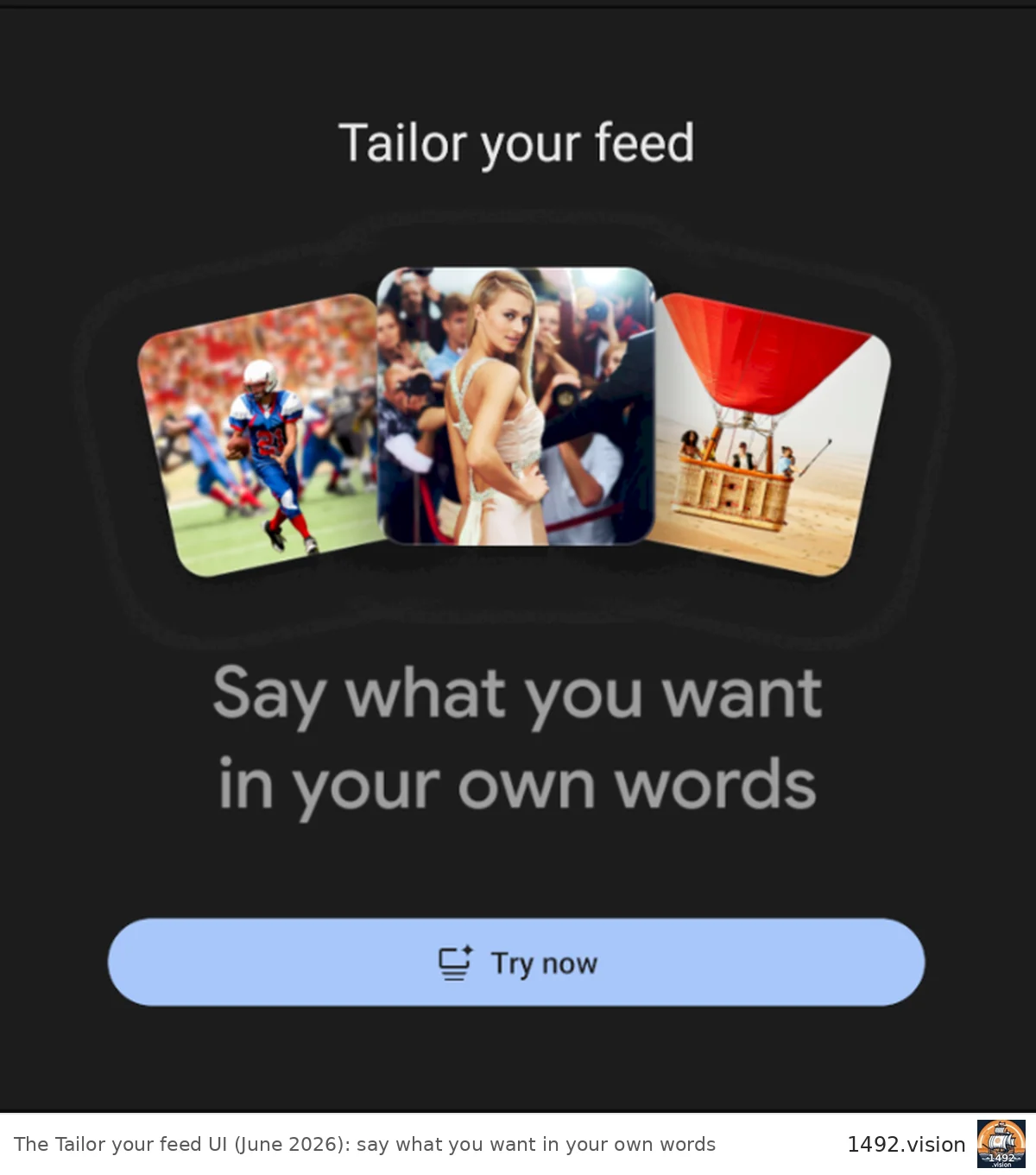
The interface, June 2026.
What we had on the table in June
The mechanism, in short (the full detail is in the deep dive):
- You write a prompt ("show me kitchen reno ideas", "less anxiety-inducing news", "more dev.to") and it is turned into SEE_MORE / SEE_LESS actions applied to your feed after a refresh.
- Server-side, a dedicated pipeline:
historicalnaturallanguagetuningcontent.f, the "historical" twin ofnaturallanguagetuningcontent.f, with a persistent conversation thread. Most likely an LLM interpreting your request and maintaining it over time. - Attribution is visible: cards resulting from your prompts carry the "You asked to see" label, and the history lives in My Activity.
- Two content selection modes: an expansion by entities and interests (the majority of cases), and a query-intent fan-out for the remaining minority, in other words the GEO mechanism inside Discover itself.
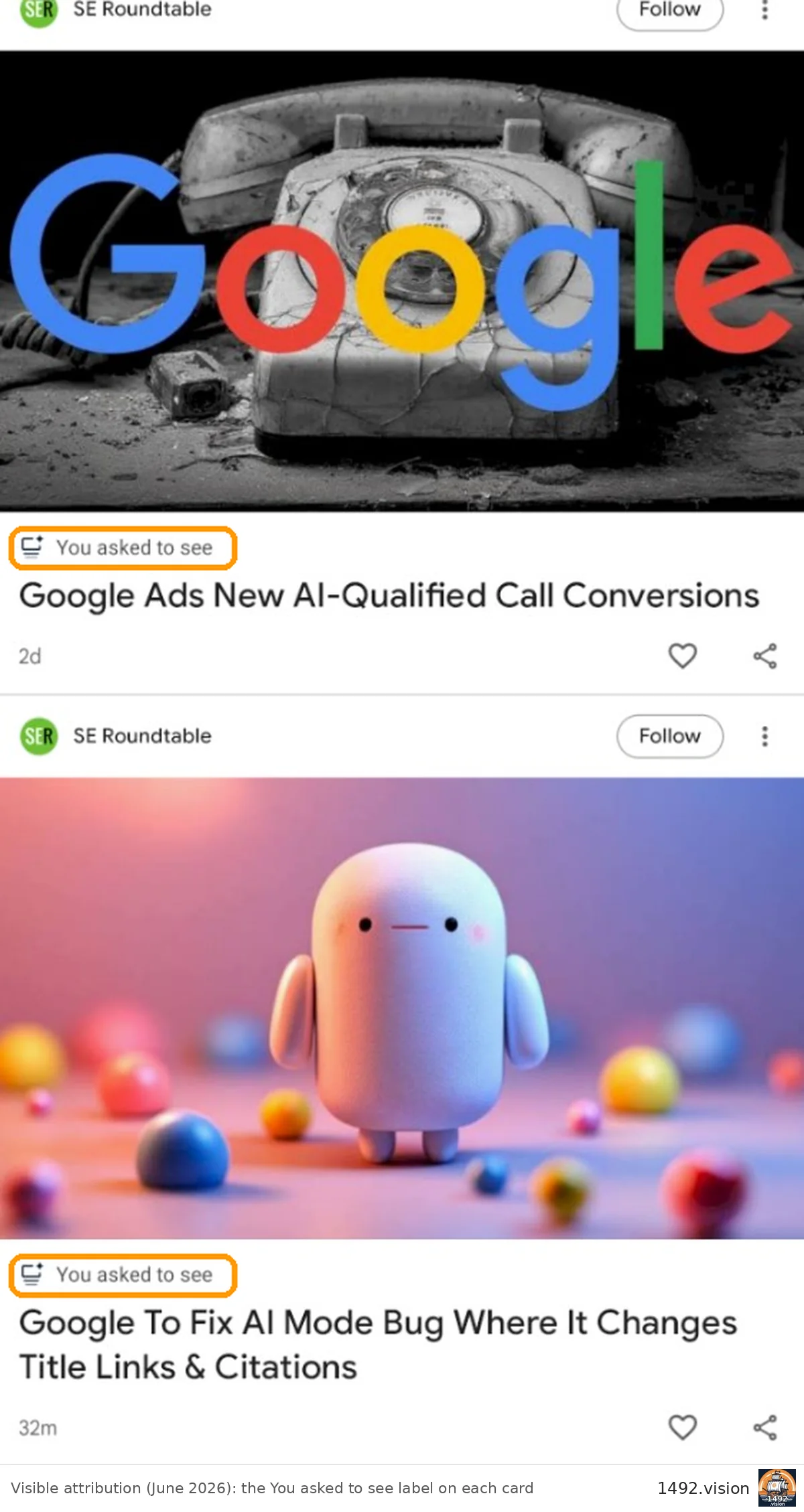
Two labeled cards, June 2026.
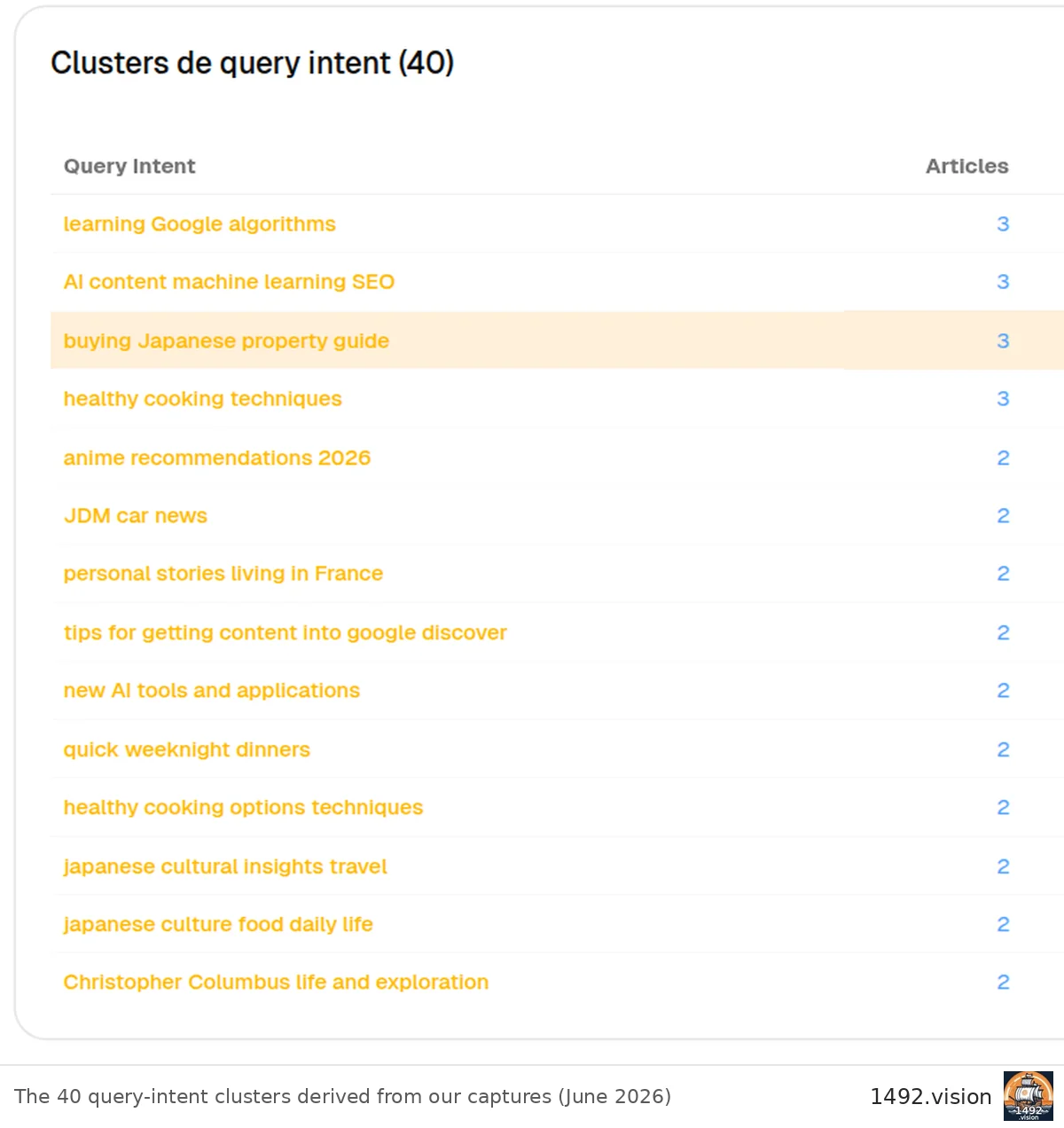
The 40 clusters derived from our captures (chart labels in French).
And the observation that gave the study its value: this pipeline mostly carries content that had almost never circulated in Discover before. Vegan recipes from small creators, Mississippi Today, niche blogs about Japanese real estate. The classic pipelines re-serve articles that are already popular; this one goes looking elsewhere.
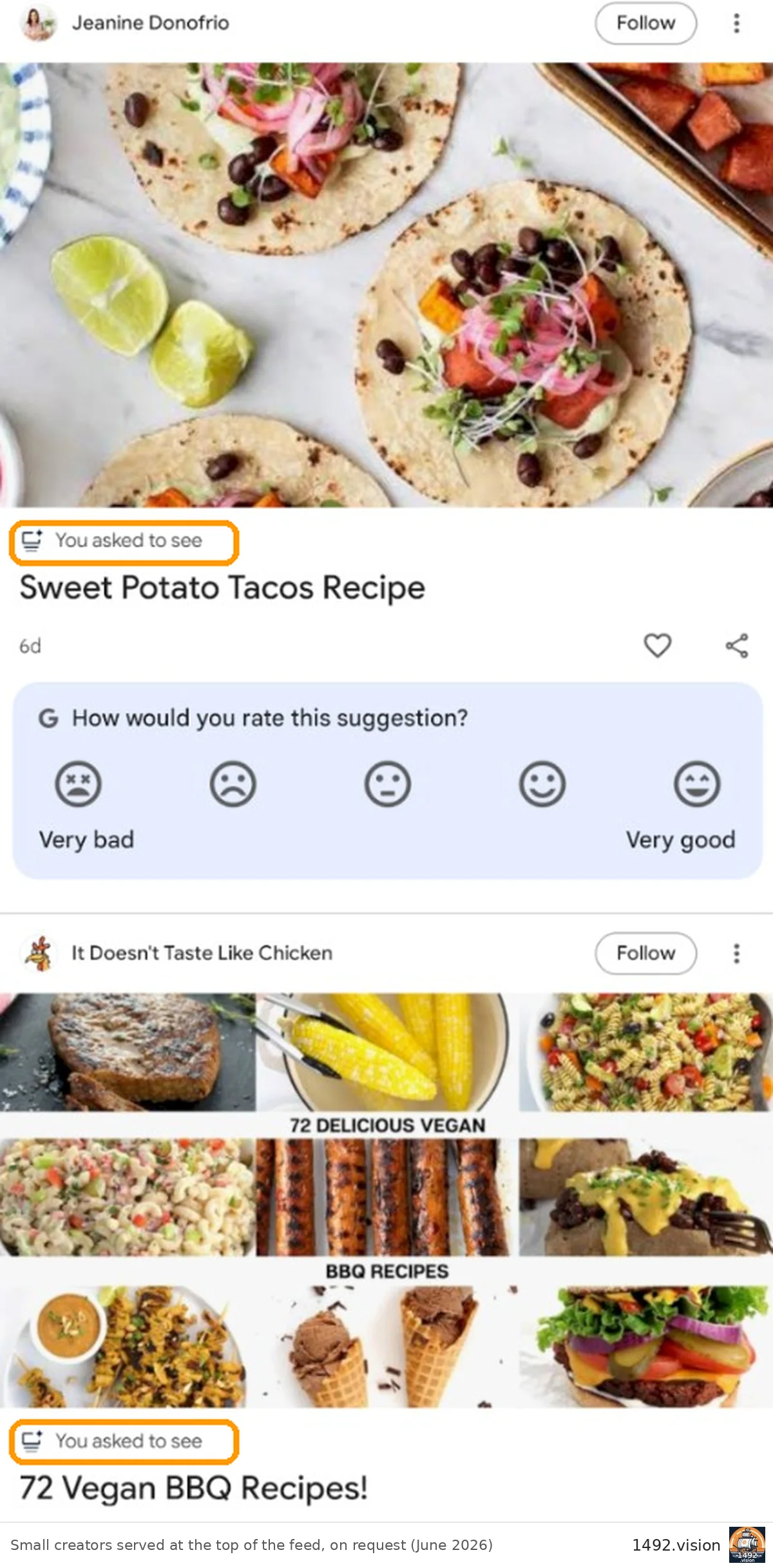
Small creators' cards, served on request.
In June, we attached one condition to all of this: the opening for niche sites would remain theoretical as long as the feature lived in Search Labs, on US accounts, in English only (measured FR traffic: about 0%).
What the August 20 announcement changes
The condition falls. Google is rolling out prompt-based tuning to everyone, directly in the feed, no Labs enrollment. The name already changed once along the way ("Tailor Your Feed" became "Add topics to your feed" in the spring), the entry point is now the three-dot menu of every card: the feature followed the classic path of a Google product moving from experiment to production, and our tracking of the successive UI states keeps the timeline.
The rollout is part of a broader move, the same one as the Preferred Sources button announced the same day (we published a practical guide to Google's "follow" buttons if you want the publisher's manual): Discover is shifting from observed personalization, where Google infers your tastes, to declared personalization, where you tell it. And the retrieval that serves declared intent does not lock onto popularity.
Why it matters if you are a niche publisher
Discover has always had a reproduction bias: to circulate there, you already had to circulate there. The tuning pipeline opens a third way, alongside the classic feed and the follow: being the answer to a reader's prompt. Our June captures show cards from near-unknown creators served at the top of a feed because a user asked for exactly that.
Concretely, three projects:
- Your entity coverage. The expansion works by entities and interests: a site clearly positioned on identifiable entities (in the Knowledge Graph sense) is easier to serve than a blurry generalist. Same groundwork as for the rest of the Google ecosystem.
- The fan-out share. The minority of prompts goes through a query-intent fan-out: the GEO logic you apply to AI Overviews plays here too, inside Discover.
- Your readers themselves. A reader can explicitly ask for more content from a named publisher; our June tests show it works. With the broad rollout, teaching your audience that this lever exists becomes real, as the follow did before it.
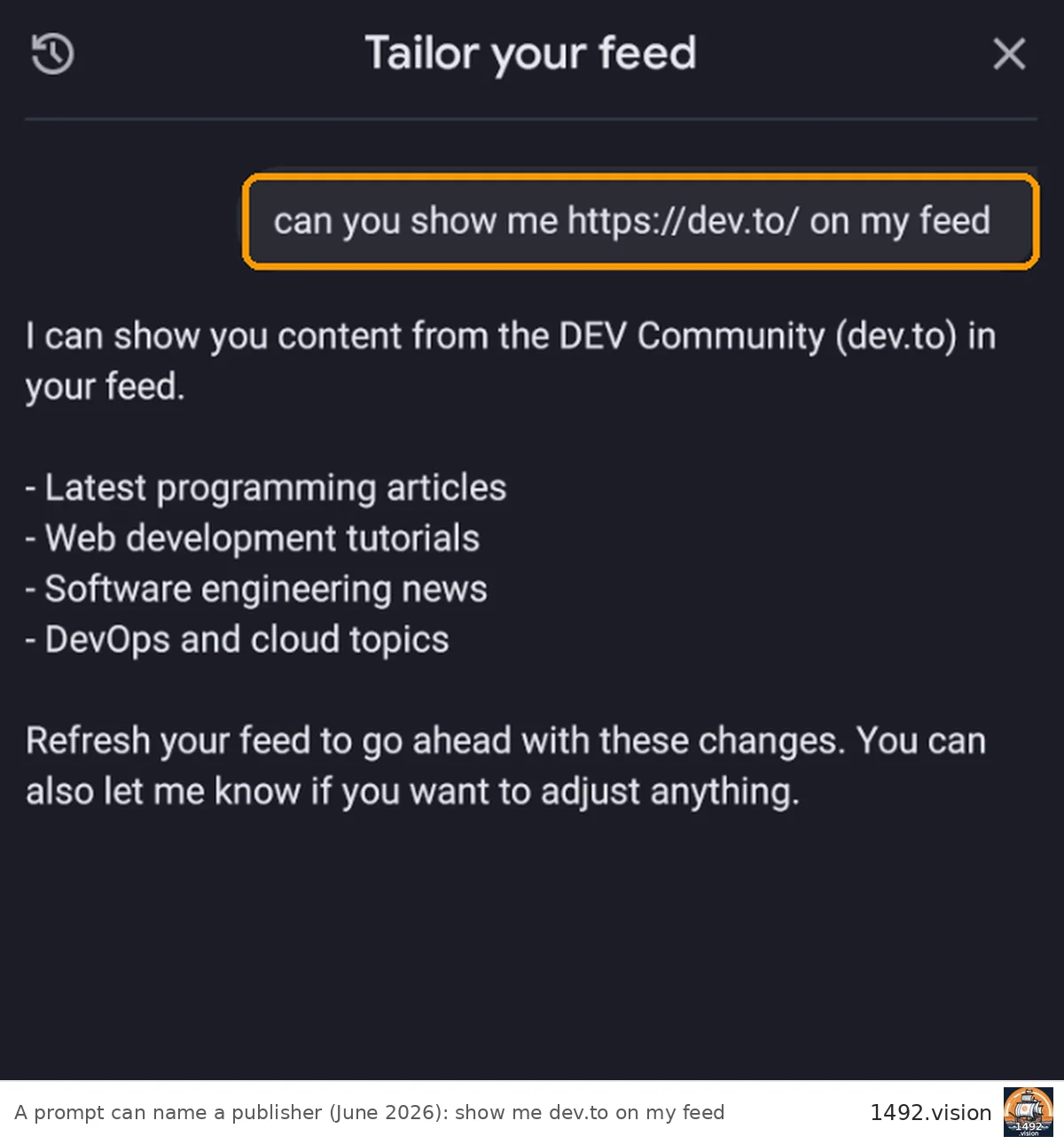
"show me dev.to on my feed", accepted and applied.
Adoption remains the unknown, and it will stay that way: an offered lever is not a used lever, and users' prompts stay with Google. No tool, no external report will tell you how many readers asked to see your site; all an outside observer can do here is what we have been doing since December: watching what lands in the feeds of their own accounts.
The heading is confirmed either way: the power of selection is moving to the reader. You might as well give them good reasons to name you in their prompts.
Method and limits: field tracking of the feature since December 2025 (Google app, US Search Labs accounts, English), UI states, server responses and attribution tags captured on our test devices; identification of the historicalnaturallanguagetuningcontent.f pipeline detailed in the deep dive (SEL, June 2026, French version at Abondance); the screenshots in this post date from that period, the broad-rollout UI may differ; "most likely an LLM" remains our reading of observed behavior, not a Google confirmation; the rollout announced on Aug 20 ("coming days") was not yet visible on our FR accounts at publication time; actual usage of the feature (prompt volume, adoption) is not measurable from the outside, our observations cover only the pipeline's behavior as seen from our own test accounts.
Posted on 2026-08-25
More reliable, sourced reporting on Discover? Add us to your sources!
Add to sources Add to sources